"Real Estate Video in Costa Rica: What Makes a Property Stand Out?"
Most buyers are deciding from another country, on a screen, without ever standing on the terrace. What the film has to do in their place.
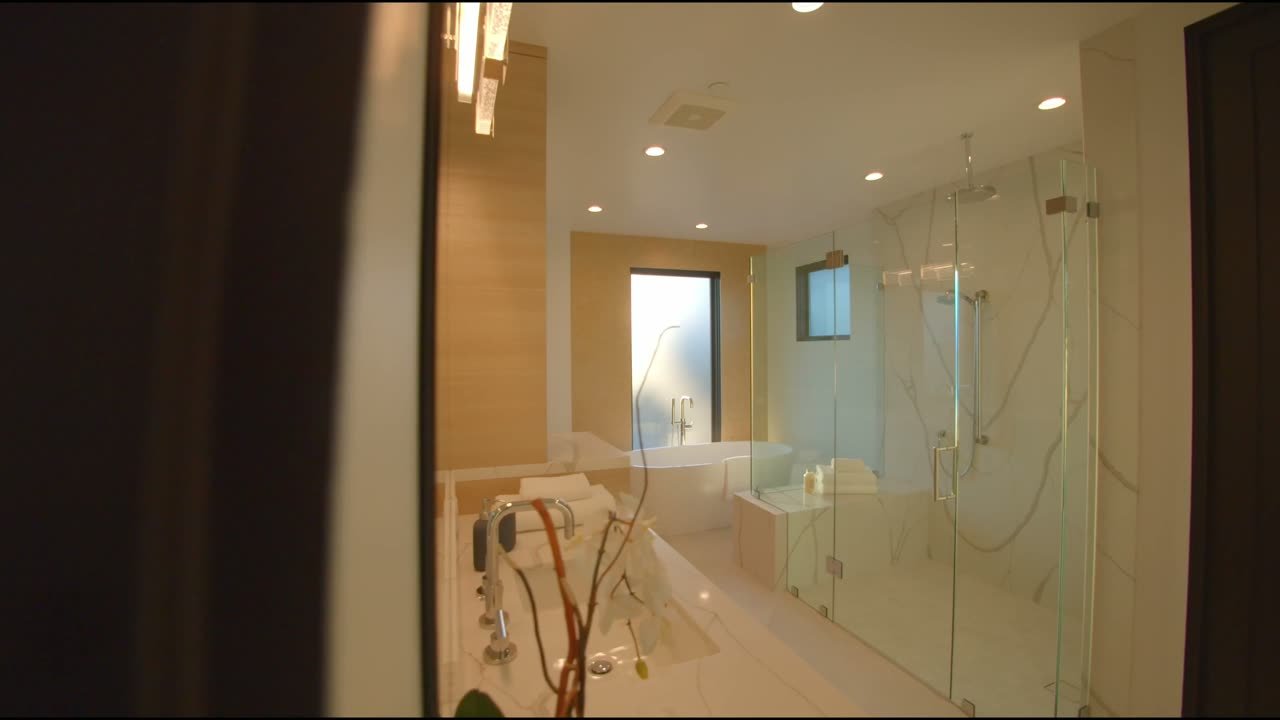
A property in Costa Rica is very often bought by someone who lives somewhere else.
They're looking at it from Denver or Munich, they may fly out once, and a good part of the decision is made before that trip. The film isn't a supporting document in that situation. For a while it's the only thing standing in for the house.
That changes what belongs in it.
Answer "where am I" in the first frame
The question a distant buyer asks before any other is where this actually is. How far from the water, really. What's behind it. Is there a road. What are the neighbours doing.
One aerial frame that holds the house, the trees and the ocean answers all of that at once, and it stops the rest of the film from being read with suspicion.
Get it out of the way early. A film that saves its establishing shot for the end asks the viewer to hold questions for a minute and a half.
Then come down and stay down
Once the location is settled, the drone has done most of its work.
Volumes, materials, the way light crosses a room, what the terrace is like to sit on. That's eye-level footage, and it's where somebody actually pictures themselves. A film made only of aerials is pleasant and strangely uninvolving; you've seen the estate, not the house.
I keep aerials to an arrival, sometimes a departure, and give the rest to the ground.
Show the day, not just the rooms
Buyers in this market aren't only comparing square metres. They're deciding whether they want that life.
So the useful footage includes things an inventory would skip: the shade at eleven in the morning, the walk down to the sand, the kitchen doors open with nobody in the room, the sound of what's around. Those shots take minutes to get and they're what someone replays.
Where the edit usually goes wrong
Two habits are worth breaking.
Bedrooms early. They're rarely the strongest rooms and they start to resemble each other after the second one. I put them in the middle, where attention naturally dips, and keep the beginning and the end for what holds someone.
And length. Between forty-five seconds and a minute ten is where people watch to the end. Three minutes on a house suggests you're working hard to convince, which is the opposite of the impression a good property gives.
Filming inside the boundary
Flying over a neighbour's land isn't something I do, and plots that aren't rectangular make that genuinely difficult.
I've spent entire approaches designing a movement that shows a property properly while staying inside its own limits: arcs that stop short, rises that lean away, angles I wouldn't have picked if the land had been square. Nobody watching will ever notice, which is rather the point.
In Costa Rica, with houses often set close together under tree cover, I expect that to take more planning rather than less, and I'll be reading the local rules carefully before the first flight.
What can be promised, and what can't
A film makes a property travel. Someone who can't come this month sends it to their partner the same evening, and it gets watched on a sofa rather than skimmed on a listing page.
Nobody can promise a sale price or a timescale for it. Too much else decides that. What's within reach is that the people who do fly out already know what they're coming to see.
Written before I arrive
I move to Santa Teresa in September. What's above comes from properties I've filmed on the French coast and from how this market works everywhere: remote buyers, screens, decisions taken at a distance.
What I'll add later is what only shows up on site: how the light really behaves on those terraces, what the wet season does to a shooting week, which details local buyers look for that I don't yet know to film.
If you'd like to see the property work behind this, it's here.
More in Real estate video