Surf Videographer in Santa Teresa, Costa Rica
Filming surfers from the water, the sand and the air, what's in the bag, how a session is covered, and what the Pacific will change for me.
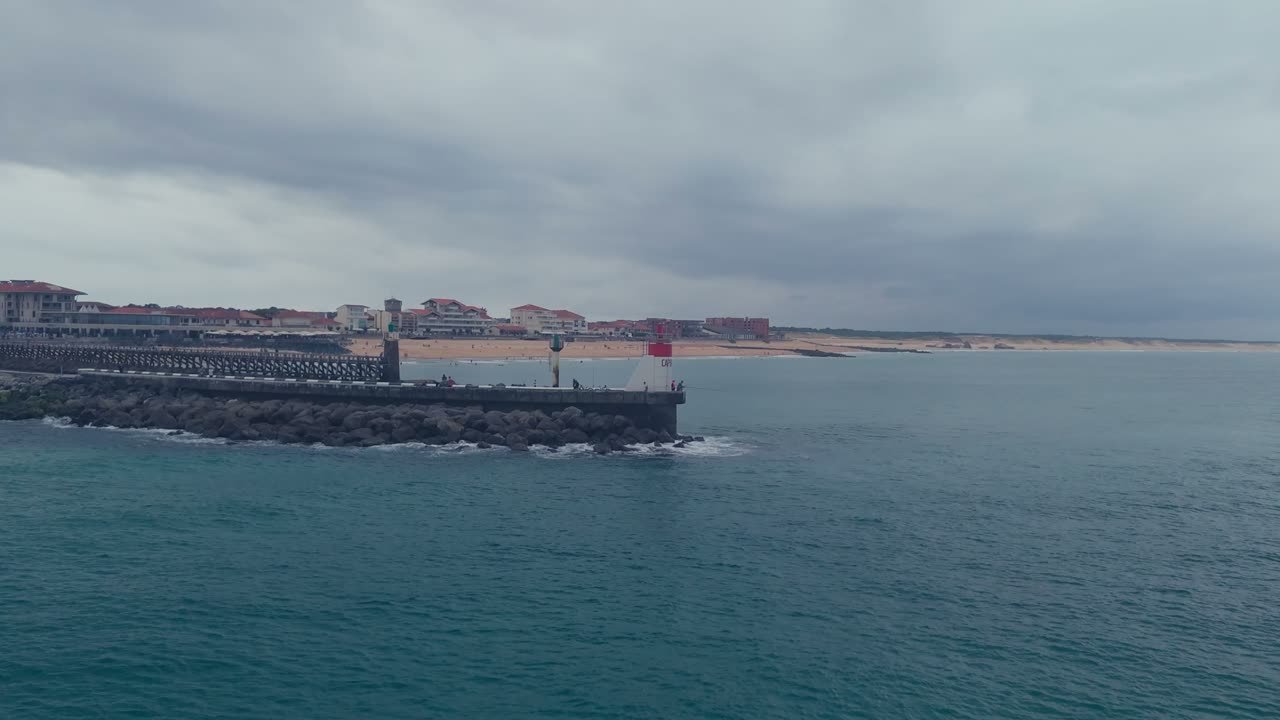
I started filming surfers in Brazil, on the beach at Madeiro near Pipa, and I've spent the last few years doing it on the Landes coast in south-west France. From 25 September 2026 I'm in Santa Teresa.
Below is how I work a session, and the parts of it I expect the peninsula to rearrange.
Who I film
Surf schools, mostly, and brands. Schools want their students to leave with something worth sending to their family, and they want material for their own feed. Brands want a rider, a product and a place to sit in the same series of images.
Individual surfers too. That one is simple. Someone paddles out, I cover the session, they get the waves back.
What's in the bag
A Mini 4 Pro and four batteries. A gimbal, which mostly earns its place on the sand while a school gets ready. An iPhone with a ×6 telephoto, filming in Log ProRes LT through the Blackmagic Camera app at 4K 60. A vacuum-sealed housing, bodysurf fins and swimming goggles for the water. Sunscreen, a bottle of water, and a tripod that spends as much time holding the bag off the sand as holding a camera.
It fits in one waterproof pack, and that matters more than it sounds. Everything I carry has to survive a walk down a beach and an hour of salt.
Two hours, thirty clips
For a school, the shape of a session is fairly settled: an hour in the water, an hour outside it. The water gives the rides. The hour on land gives the walk down, the wax, the briefing, the faces afterwards, which is usually where the personality of the place actually shows up.
That comes back as around thirty clips, or two edits ready to post. Cut for how people watch on a phone, and for how the feeds tend to carry them.
Reading the day before anyone gets wet
I carry a monocular. At home I go to the Boiteux beach and sweep the coast left and right to see what the banks are doing, where it's breaking cleanly, whether the crowd has already found it.
Wind is the part that stays hard. Forecasts get you close and then the morning does what it wants, so I plan for the swell and improvise on the wind.
What the Pacific changes
Warm water first, and it changes more than comfort. No wetsuit means longer in the water, less time lost getting in and out, and a body language on camera that's looser than a February session in the Landes.
The light is the bigger shift. Near the equator the sun is overhead through the middle of the day and it drops fast at the end. The soft late hour I build French sessions around is shorter there, so the morning carries more of the work.
Offshore mornings are the pattern people describe on that coast, which would put the good conditions and the good light in the same window. I'd rather see that for myself before I write it as a rule.
And salt with real humidity behind it. My housing already goes out vacuum-sealed; I expect the drying routine at the end of a day to get longer rather than shorter.
What a month there will teach me
None of the above comes from a session in Santa Teresa, because I haven't shot one. It comes from the same job done on a different ocean, plus the things about latitude and tides that anyone can look up.
What I don't know yet: which banks hold on which swell, when the line-up fills, how far you can fly before someone reasonably objects, and who to ask. That takes weeks of being in the water, not research.
I'll come back to this page in October with the parts that turned out to be wrong.
The surf work, and what each option covers, is here.
More in Surf & sport video